Showing posts with label World War II. Show all posts

Sunday, November 14, 2021

American Veterans of Chinese Heritage - a November 2021 Tribute

Veterans Day commemorations were held this past Thursday - I am finally getting around to posting.

This is my second response to anti-Asian violence in America.  The first post was Deny Them Their Names from April, 2021.

This year's national agenda for the holiday included the award of Congressional Gold Medals to some surviving Chinese American veterans.

It is time to crack open a library book.  Published in 1997 by the Los Angeles organization called the Chinese Historical Society of Southern California and edited by Marjorie Lee, Duty & Honor: a Tribute to Chinese American World War II Veterans of Southern California was a necessary effort to locate and document hundreds of local Chinese Americans who served our country during the Second World War.

A library copy borrowed from Branch 63, Chinatown Branch
of the Los Angeles Public Library System

There has never been a more important time to explore the contents of this book than now - if an American could get their hands on a copy.  I borrowed my copy from the Chinatown branch library.  The only other copies available in the entire city are at the great Central Library downtown.

Holdings throughout the U.S. are mostly in college & university libraries.  The only other public library copy available I found is at the Allen County Public Library in Fort Wayne, Indiana.

How else can the average person access this book?  The Internet Archive has a copy free to borrow and download.

I recognize several men profiled in the book.  Architect Gin D. Wong was included.  (He is mentioned in a previous post of mine.)

The 98 year-old gentleman named Louis Moore is in the book.  Mr. Moore currently resides in southern California.  Here he is pictured this past summer, following a flurry of media attention after the release of his book, Eternal Love, the True Love Story of Nellie and Lou Moore.

Mr. Louis Moore, an American veteran of World War II
Photo courtesy of Stephen Gee

The dearly departed father of my friend Albert Wong also contributed to the book.

Mr. Wong served three years and one month until after the war ended.
He was quoted in the book "I was pretty lucky."

His son Albert wrote:

There were a few instances when Dad was in a talkative mood (downstairs at the dining table of the Steele St. house), that is when he shared stories of surviving near death experiences on the battlefield.  On more than one occasion, when nearby explosions completely covered him in his fox hole, he had to quickly dig himself out before suffocating.  One time after digging himself out, he found an unexplored rocket shell just a few feet from him.  Another time, he was carrying his (full pack and) mortar gun and took enemy machine gun fire, he had to quickly tumble down a hillside to avoid being killed.  Dad would say, God was protecting him.  If I recall correctly, Dad was awarded his Bronze Star when his platoon was trying to advance up a hill but Japanese (?) machine gun nests were dug in bunkers above and were killing American soldiers.  During the night whenever our soldiers fired their weapon, it would divulge their location and were immediately fired upon causing more casualties.  Dad was able to figure a way to fire his motor rounds undetected by covering himself and his weapon completely under his poncho, and he used a lite cigarette to adjust his mortar sights and fired his mortar grenades.  He did this continuously until there was no more enemy fire.  The next morning, Dad was credited for 19 kills.  I recall Dad sharing this account in detail. 

Dear American Veterans, thank you for your service to our country.


Thursday, June 15, 2017

Ocean Liners: in Times of Peace and War

Asama Maru...Coming to America

Grandpa immigrated to America in 1929 on the maiden voyage of the Japanese liner, Asama Maru.  The $6,000,000 passenger ship carried over 800 persons:  between 222 and 239 first class passengers (accounts vary), 96 persons in second class, and 504 in third class.  It was the first Japan-made diesel engine ship and one of the fastest at the time traveling at 21 knots.  It took a little over 12 days from Asia to California.

Los Angeles Times display ad October 29, 1929
(Image courtesy of ProQuest Historical Newspapers)

This blogger's father's father arrived in San Francisco on October 24, 1929, six days before the crash of the New York Stock Exchange.  He mostly likely traveled from the starting point in Hong Kong on a third class ticket.

The next port call for the Asama Maru was Los Angeles on October 29th, and the anticipated arrival of the ocean liner brought with it economic optimism of closer relations with the Far East.  There was no way to foresee the ship's future:  employed in the Second World War as a "mercy" ship, then as a hell ship and then its sinking by a torpedo in 1944.

On its first time arrival in L.A. the ship was publicly opened to visits by the more than 15,000 people before it set sail back to the Orient on November 1st via San Francisco and Honolulu. 


Los Angeles Times article dated October 28, 1929
(Courtesy of ProQuest Historical Newspapers)


The Asama Maru's interior décor was a blend of western and Oriental rooms.  The ship sailed through the decade of the 1930s.

From 1939 brochure
(Courtesy of the Seaver Center for Western History Research, GC-1094)

1936 brochure
(Courtesy of the Seaver Center, GC-1094)

1930 ad
(Courtesy of the Seaver Center, GC-1094)

1930 ad reverse side with travel agent stamp out of Pasadena, Calif.
(Courtesy of the Seaver Center, GC-1094)

March, 1938 sales brochure
(Courtesy of the Seaver Center, GC-1094)

March, 1938 sales brochure
(Courtesy of the Seaver Center, GC-1094)

March, 1938 sales brochure stamped with still hopeful reminder of upcoming Tokyo Olympics
(Courtesy of the Seaver Center, GC-1094)


This 1940 brochure provided a Notice that due to the war in Europe, the Japan-Europe Service route was not in operation
(Courtesy of the Seaver Center, GC-1094)


Some History of American Ships on the Pacific Coast

Pacific Mail Steamship Co. operated several side-wheel steamers in the 19th century.  The SS Colorado (1864-1878) inaugurated in 1867 the company's first scheduled service to Hong Kong, with stops in Japan.  According to an anniversary calendar, the Colorado took travelers in search of fabric, tea, and spices.  Chinese migrant workers headed to Gold Mountain (California) made the return voyage.

From APL sesquicentennial calendar 1848-1998 picturing the SS Colorado
(Courtesy of blogger's personal collection)
Pacific Mail Steamship's SS The Great Republic (1867-1878) was among the last of the wooden side-wheelers taking passengers across the Pacific to Japan and later to Hong Kong (9.5 knots speed; 1,450 passengers of which 250 were first class).

Dollar Lines was another enterprise which in the early 1920s counted upon 90 percent of its transpacific passengers from Asia.  In 1925 Dollar Lines bought Pacific Mail Steamship.  During the Gilded Age, it operated luxurious ships boasting fine crystal, china and silverware in its dining rooms, grand pianos in the first class lounges.  By 1931, Dollar's SS President Hoover was the largest U.S. built passenger liner, with a telephone in each stateroom and private baths in first class.  It carried 988 passengers in four classes at a speed of 20 knots.

Air travel during this time was new - passenger flights began in the summer of 1929 by the Transcontinental Air Transport, Inc. (later to be named TWA).

Dollar Steamship Co. became known as American President Lines (APL) in 1938.  During the Second World War, APL managed ships for the War Shipping Administration, including its own APL liners.

Another line, Matson, concentrated on mainland to Hawaii service.  In 1927, its SS Malolo (1927) was the fastest in the Pacific Ocean at 22 knots.  Three other luxury Matson ships built between 1930 and 1932 were SS Mariposa, SS Monterey and SS Lurline.  Once the U.S. joined the war, Matson liners became a part of the war effort.

War Ships

Japan joined the Axis powers on September 27, 1940.  Japanese ships were conscripted into war service.  Similarly, when the United States joined Allied forces after December 7, 1941, American ships were adapted as troop carriers, hospital ships and freighters.

Mercy Ships of War

The Asama Maru had a role during the Second World War in the exchange of civilians among countries.  The Gripsholm Exchanges involved the return of citizens behind enemy lines, and the first took place with the Asama Maru in 1942 transporting American diplomats and their families, as well as some South Americans, who had been imprisoned since December 8, 1941.  Another ship, the Italian Conte Verde, simultaneously swept up Americans stranded in China.  The Asama Maru left Yokohama, Japan on June 25th, making further pickups at Hong Kong, Saigon and Singapore, where it met the Conte Verde.  Both ships departed for Lourenco Marques, Mozambique, with all of their lights on, illuminated crosses on the hind deck, and with the word EXCHANGE painted in large letters on the sides, arriving July 23rd. 

Arriving also was the Swedish MS Grispsholm which had carried Japanese nationals from New York and Rio de Janeiro.  The exchange took place on the 24th.  (In comparison to the Asama Maru that was Japan's first diesel-fueled passenger liner, the Grispsholm was a 1925 cruise ship and the first diesel-powered one to cross the Atlantic Ocean.)

Asama Maru was sunk by an American submarine USS Atule in the South China Sea on November 1, 1944.

Hell Ships of War

Among the luxury Japanese liners from the era of the 1930s, this blogger finds a brief web mention that the Asama Maru served as a hell ship.  These Japanese ships transported WWII prisoners-of-war from Japan-occupied lands - their intent to ship these POWs to Japan and other occupied territories for slave labor.

Another liner, Nitta Maru, formerly serviced the Japan-Europe passenger route (referenced in a previous image above), was converted during the war and served as a hell ship (documented is the transport of Allied soldiers from Wake Island to Japan in January of 1942).

Many other Japanese military ships served as hell ships, and this blog post serves to bring attention to the Arisan Maru that transported 31st Regiment Infantry Private Charles G. Vargas who hailed from the L.A. area.

(Image courtesy of J. Adame)


The Arisan Maru was a military ship, never a passenger liner, that set out carrying over 1,780 prisoners from Bataan, Philippines on October 11, 1944 destined for Formosa.  The men had already endured several years of hardship, brutality, and torture by the hands of their Japanese counterparts since the fall of the Philippines in 1942.

As the men were crammed onto the ship, they faced starvation, dysentery and continued torture.  Many began dying while the ship detoured for several days before the journey north.  The ship did not bear any signs indicating the transport of American and Allied POWs and other civilian prisoners, and on October 24, 1944 friendly fire torpedoed the ship.  Five soldiers survived, but Private Vargas and the rest all perished .  This was the greatest number of fatalities in a single instance at sea.

Private Vargas is remembered as a young resident of Simons, California, the brick-making company town near Montebello in L.A. County.  His profile in the American Patriots of Latino Heritage website states he was born in Santa Monica (Simons Brick Company had a plant located in Santa Monica, and quite probably Vargas was born there.)  Also listed are his three brothers, the oldest Alexander (born in Simons, 1920), and Charles' two younger brothers, Salvador (born in Santa Monica, 1926) and Ismael (born in Santa Monica, 1928) - the three brothers survived the war.  Out of all the profiles in the Latino Heritage site, this blogger only found a couple of soldiers who died on hell ships, one of which was Private Vargas.

At the war's Pacific Theater, the Death March of Bataan, the prison camps and the hell ships were bleak episodes in humanity, where war produced heinous and atrocious crimes by otherwise civilized men in otherwise peaceful times.  It is a mournful memory even 73 years later.

Grandpa was living in L.A. before he was drafted as a civilian worker following the attack at Pearl Harbor.  He worked in Kaneohe, Oahu.  Found in an old suitcase, he saved what appears to be a memento of his time on the island:

Pillow case souvenir

Wednesday, April 18, 2012

Pacific Standard Time Marches On: History of East Los Angeles College, Monterey Park, Cal.

 
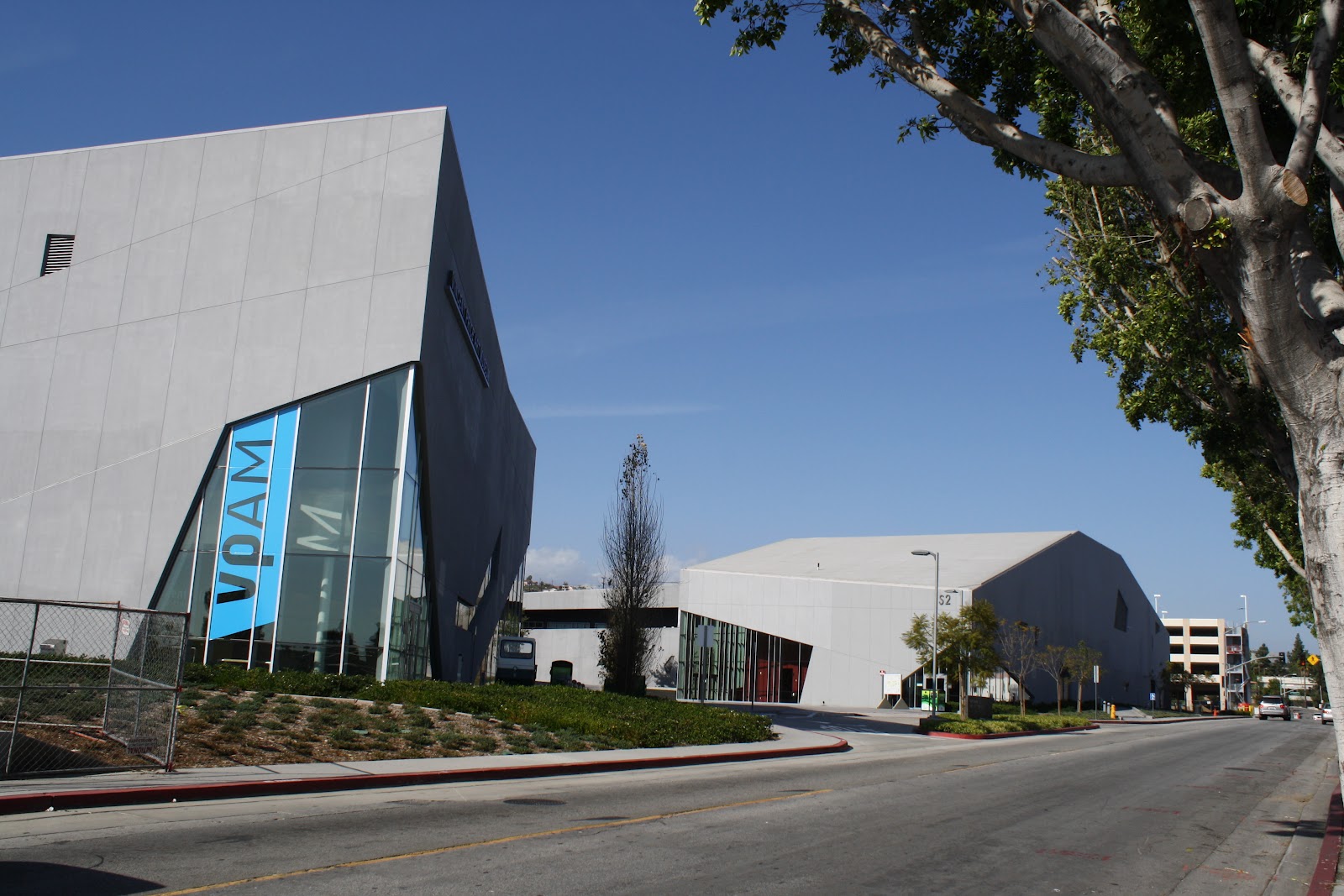
The Getty's art initiative, Pacific Standard Time:  Art in L.A. 1945-1980, enabled the exploration by 60+ cultural institutions into L.A.'s post-war art scene.  Southland exhibitions started last September.  While some shows have concluded, others opened this year and are ongoing.  'Round the Clock:  Chinese American Artists Working in Los Angeles is currently at the Vincent Price Art Museum on the ELAC campus.


This past Saturday afternoon of April 14th I was back on the campus.  I sat in a capacity-filled VPAM lecture hall and listened as three historians (Suellen Cheng, former executive director and founding chief curator of the Chinese American Museum; Ron Miller, former president and historian of the National Watercolor Society; Charles Solomon, animation historian and critic) joined artist Milton Quon and curator Sonia Mak to converse about the exhibition and the lives of the five artists.


Impact on Society in Spite of Discriminatory Challenges

The five artists applied their talent to impact a society that contemporaneously excluded them.  Mak drew upon the irony that the artists managed to become educated and eke out careers long before the Chinese Exclusion Act was repealed in 1943.  Solomon called Tyrus Wong a touchstone in the art of animation because his distinctive style has resonated with new generations of artists in the industry.

Time Marches on the History of East Los Angeles College

Institutions for learning also proliferated after the end of war.  East Los Angeles College was a prime example.  I decided to take Betty's initiative (could not resist the pun) and learn about the origins of ELAC.

The first junior college established in 1929 was the Los Angeles City College (then called Los Angeles Junior College.)  In the Spring of 1945, the Los Angeles School District (later known as LAUSD) approved funds to create a new junior college. 

News reports explained that the proposed new school would be established in a "decentralized" location that would be geographically desirable to students.  Temporarily established on the campus of Garfield High School about a mile and a half away from the present-day campus, the college was open by October of 1945.

Returning war veterans comprised twenty percent of the male student population.  Veterans were now armed in peace-time with education assistance under the G.I. Bill.  Chicanos who served by the hundreds of thousands had opportunity for higher education.

Spanish Grazing Land

The land later to become the permanent site of ELAC at Cesar Chavez Avenue (formerly Brooklyn) near Atlantic Boulevard was a part of Antonio Maria Lugo's vast Rancho San Antonio, one of the earliest Spanish land grants in the region bestowed to a California-born soldier of the Spanish army.  The area later became Rancho Repetto, named after an Italian, Alessandro Repetto, who also purchased other contiguous parts that today comprise southern Monterey Park and Montebello.  Chunks of the Repetto estate were bought in the mid-1880s by five prominent men:  Harris Newmark; his nephew Kaspare Cohn; John D. Bicknell, Isaias Hellman, and Stephen M. White.  (Newmark and Cohn also founded Montebello; Hellman would later donate parcels of land for the original USC campus; White would later become a U.S. Senator and champion for a free harbor at San Pedro.)

The land at Brooklyn and Atlantic was wilderness during the Spanish and Mexican periods in Alta California.  Repetto herded sheep on his land.  By the time the land changed hands again, ensuing years it was vacant land at Brooklyn and Atlantic, in contrast to nearby properties of Hellman and his business partners that were rich with oil strikes.

First Graduating Class in the Summer of 1946

The first graduating class of ELAC consisted of two men and one woman.  Shown below is a plaque in front of the Rosco C. Ingalls Auditorium.  Dr. Ingalls was the first college director of ELAC; he was the director of Los Angeles Junior College for the prior eleven years.


A year had past as East Los Angeles Junior College functioned under crowded conditions at Garfield High School by December, 1946. By then the school district positioned itself to purchase a 35-acre lot from Isaias Hellman.  At the same time, the County Board of Supervisors were aiming to acquire 80 acres adjacent for the purpose of building a controversial juvenile hall complex.  The community objected, and the juvey hall plan went away.

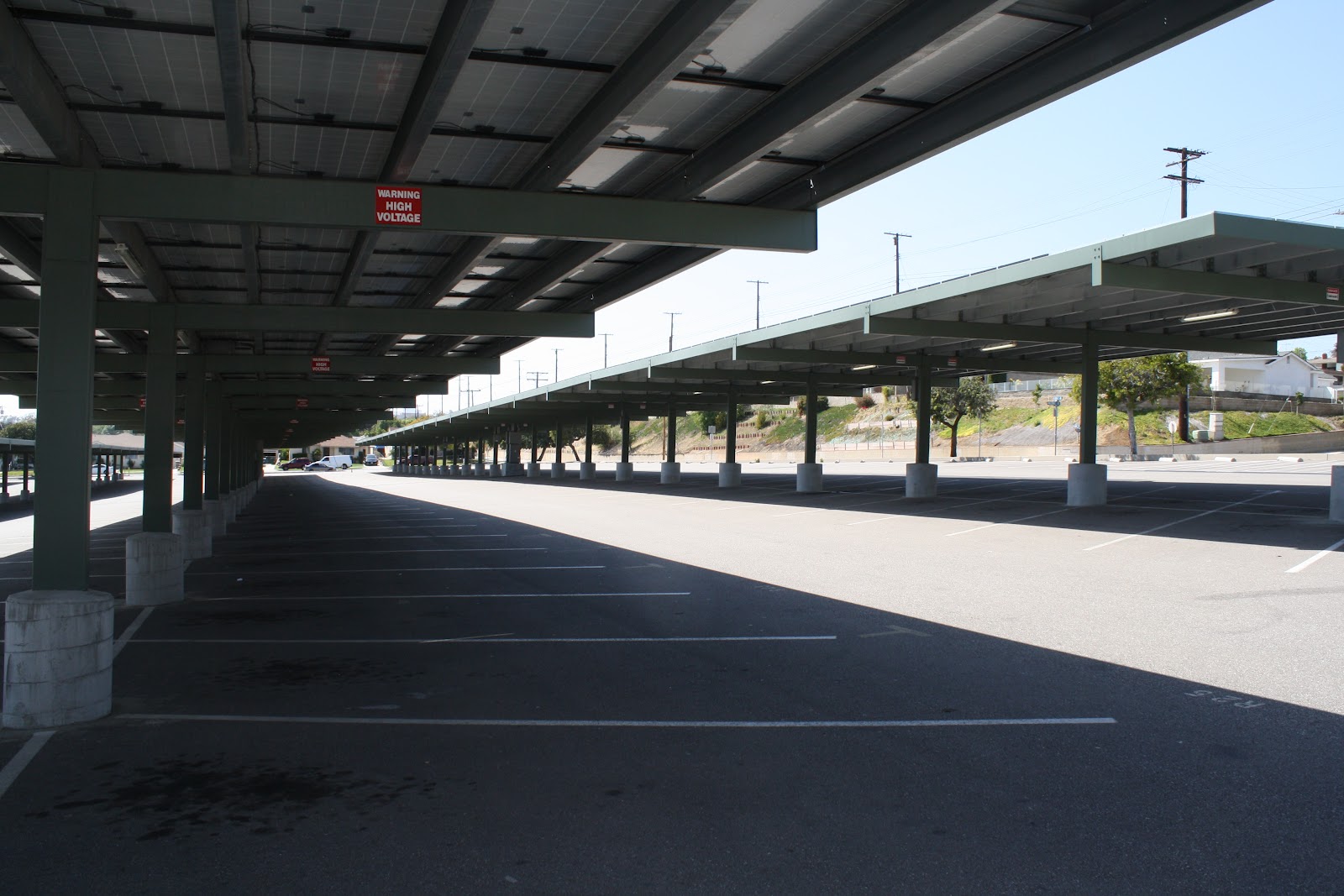
The expansive space-hogging stadium parking lot at the northwest corner of campus - the approximate site of the foiled plan for a juvenile hall.
A New Campus

The new campus was formally opened on January 29, 1948.  Several small buildings and eight large buildings were moved from Garfield High School.  Four large buildings were acquired from the Santa Ana Army Air Base that was decommissioned after the war ended.  The new semester started on February 2nd.  The number of instructors in 1945 were 12 to the student population of 117.  The count just prior to the new campus was 46 instructors to 1,182 students.

In the Spring, Julian Nava was elected Student Body President, and Mitzi Ishihara won the seat of Vice President.


From the Los Angeles School Journal 9/22/47
Courtesy of the Seaver Center

Building Blues

In November, 1949, the ground-breaking for a million-dollar cement stadium took place and was expected to be ready for the following year's football season.  An Administration building was proposed in early 1950 but lack of funding led to a suspension of the plans by September.  The construction of an auditorium managed to receive funding and was finished in a timely manner by 1951.


The south face of the auditorium

1951 was also the starting point of actor Vincent Price's relationship with ELAC.  He frequently spoke on campus and at the graduation ceremonies.  One of his legacies was his gift of his art collection for which 90 pieces were first deeded in 1957 and has grown to over 9,000 items today.

By the close of 1951, the school district purchased temporary classroom buildings.  Those buildings were still in "temporary" use in 1955, but new construction funds had also been approved.  Library construction found funding in 1957 - modernization to the Helen Miller Bailey Library began in 2009 and is still ongoing.

The administration of the city colleges underwent re-structuring to separate itself from a K-12 system; in 1967 Governor Ronald Reagan authorized the establishment of a Board of Governors for the California Colleges and changed the official designation of the institution from "junior" to "community" colleges.

By 1969, the Los Angeles Community College District was created with its own Board of Trustees.  They approved a library addition and more classroom construction in a projected 10-year plan.

Development of Surrounding Neighborhoods

ELAC's presence brought the development of new houses nearby in East Los Angeles as well as Monterey Park.  In December of 1950 the Board of Education asked the City Council of Monterey Park to exclude the college boundaries in the city's bid towards annexation of 400 acres.  By 1954, the construction of Atlantic Square shopping center was under way.

It was not until 1976 that voters allowed Monterey Park to achieve annexation, adding 256 acres that included ELAC and the Bella Vista area of East L.A.

Today's Campus

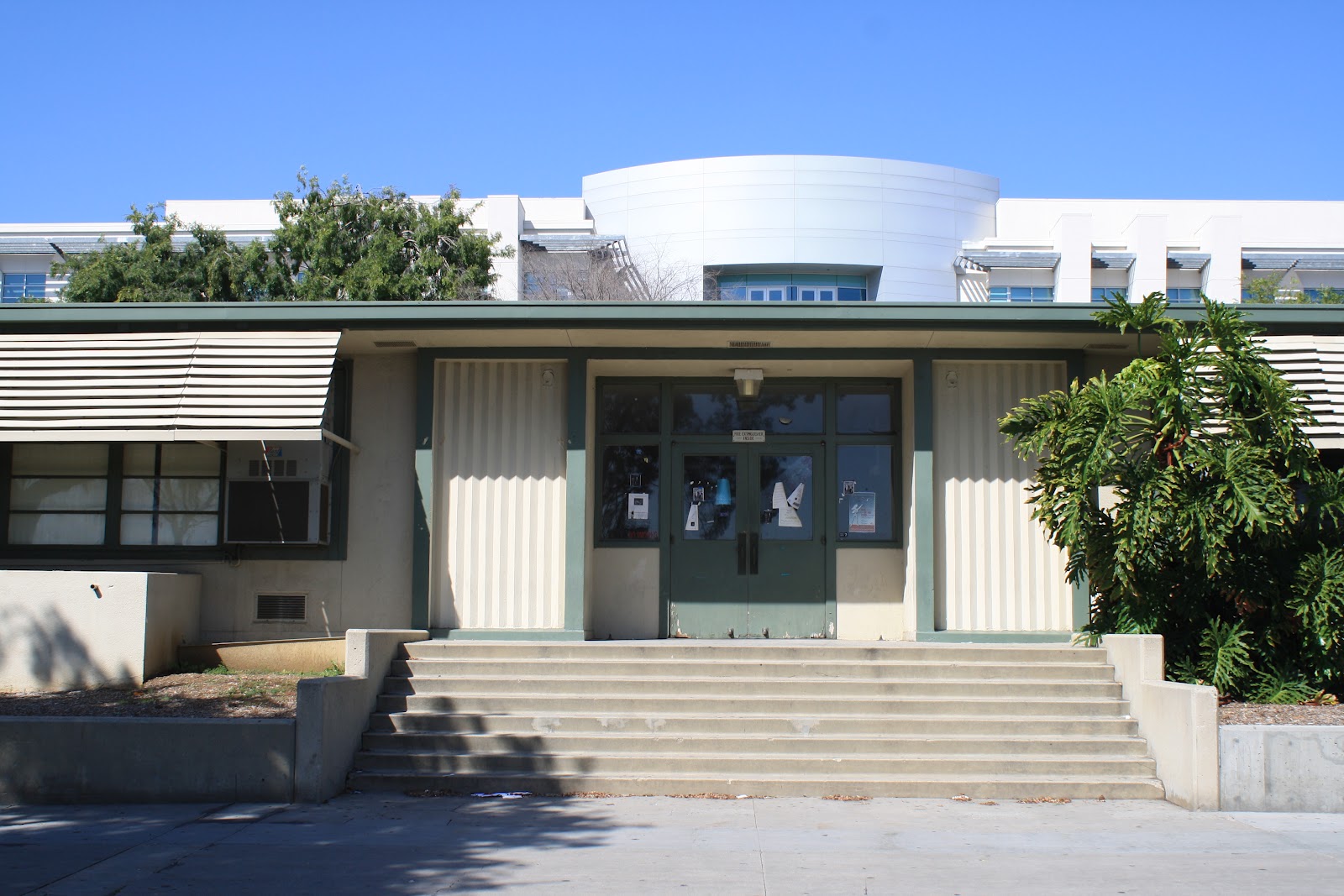
In the new millenium, the campus is a mix of older single story buildings, new construction, multi-story parking structures and open-air parking lots.

The campus outer rim appears very modern with giant lettering:


Along Collegian Avenue
Strolling into the middle of campus, one sees the interchange of old and new structures:


New construction is peeking out from behind the single-story building

One of the early new structures done in the 21st century - the Technology Center


The Helen Miller Bailey Library has been undergoing modernization
Library functions were relocated about the summer of 2009.  The library was expected to be finished within two years.  The current delay in completion is compounded by the need to add the name "Bailey" to the signage.

Weingart Stadium

A lot of school spirit resides on the north side of campus.  As with the entire campus it is also in flux with renovations.


Notice the finish date of Fall 2010 has been pasted over with a new date of Summer 2012.


A Springtime reminder of the dissent from last October, 2011